Hey Everyone!!! It’s been literal months since I last posted. I could write a whole long spiel about where I’ve been but it all boils down to life. I had a lot going on and a lot happening so during my downtime I just wanted to shut my mind off and just read. So, let’s jump back into the swing of things and talk about the 24 backlist books I want to prioritize this year. 12 are physical and 12 are on my Kindle because I have a lot of both and 24 just worked out perfectly to have 12 of each.
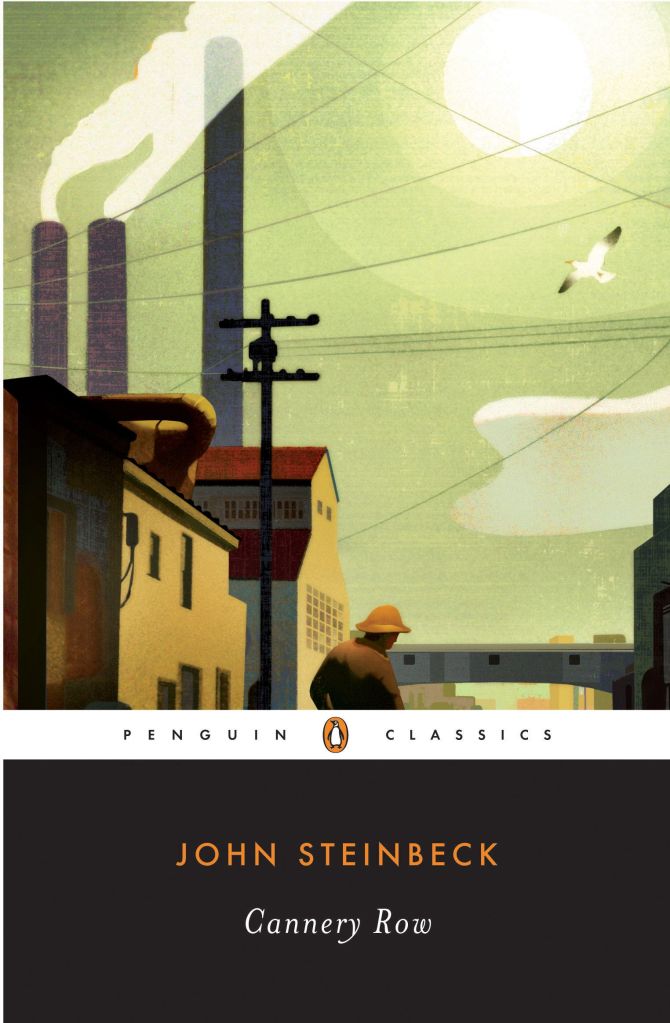
Steinbeck’s tough yet charming portrait of people on the margins of society, dependant on one another for both physical and emotional survival A Penguin ClassicPublished in 1945, Cannery Row focuses on the acceptance of life as it is both the exuberance of community and the loneliness of the individual. Drawing on his memories of the real inhabitants of Monterey, California, including longtime friend Ed Ricketts, Steinbeck interweaves the stories of Doc, Dora, Mack and his boys, Lee Chong, and the other characters in this world where only the fittest survive, to create a novel that is at once one of his most humorous and poignant works. In her introduction, Susan Shillinglaw shows how the novel expresses, both in style and theme, much that is essentially Steinbeck: “Scientific detachment, empathy toward the lonely and depressed . . . and, at the darkest level . . . the terror of isolation and nothingness.” For more than seventy years, Penguin has been the leading publisher of classic literature in the English-speaking world. With more than 1,800 titles, Penguin Classics represents a global bookshelf of the best works throughout history and across genres and disciplines. Readers trust the series to provide authoritative texts enhanced by introductions and notes by distinguished scholars and contemporary authors, as well as up-to-date translations by award-winning translators.
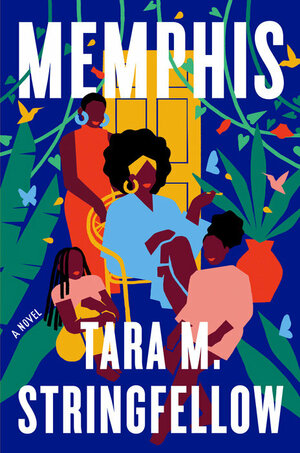
A spellbinding debut novel tracing three generations of a Southern Black family and one daughter’s discovery that she has the power to change her family’s legacy.
Summer 1995: Ten-year-old Joan, her mother, and her younger sister flee her father’s explosive temper and seek refuge at her mother’s ancestral home in Memphis. This is not the first time violence has altered the course of the family’s trajectory. Half a century earlier, Joan’s grandfather built this majestic house in the historic Black neighborhood of Douglass—only to be lynched days after becoming the first Black detective in the city. Joan tries to settle into her new life, but family secrets cast a longer shadow than any of them expected.
As she grows up, Joan finds relief in her artwork, painting portraits of the community in Memphis. One of her subjects is their enigmatic neighbor Miss Dawn, who claims to know something about curses, and whose stories about the past help Joan see how her passion, imagination, and relentless hope are, in fact, the continuation of a long matrilineal tradition. Joan begins to understand that her mother, her mother’s mother, and the mothers before them persevered, made impossible choices, and put their dreams on hold so that her life would not have to be defined by loss and anger—that the sole instrument she needs for healing is her paintbrush.
Unfolding over seventy years through a chorus of unforgettable voices that move back and forth in time, Memphis paints an indelible portrait of inheritance, celebrating the full complexity of what we pass down, in a family and as a country: brutality and justice, faith and forgiveness, sacrifice and love.

Bleak House, Dickens’s most daring experiment in the narration of a complex plot, challenges the reader to make connections–between the fashionable and the outcast, the beautiful and the ugly, the powerful and the victims. Nowhere in Dickens’s later novels is his attack on an uncaring society more imaginatively embodied, but nowhere either is the mixture of comedy and angry satire more deftly managed.
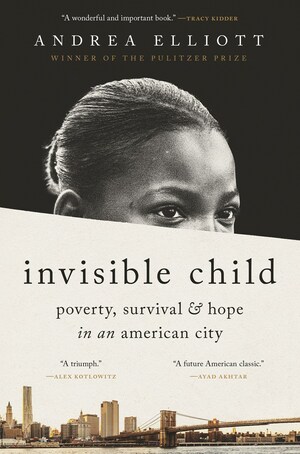
The riveting, unforgettable story of a girl whose indomitable spirit is tested by homelessness, poverty, and racism in an unequal America–from Pulitzer Prize-winning journalist Andrea Elliott of The New York Times
Invisible Child follows eight dramatic years in the life of Dasani Coates, a child with an imagination as soaring as the skyscrapers near her Brooklyn homeless shelter. Born at the turn of a new century, Dasani is named for the bottled water that comes to symbolize Brooklyn’s gentrification and the shared aspirations of a divided city. As Dasani grows up, moving with her tight-knit family from shelter to shelter, this story goes back to trace the passage of Dasani’s ancestors from slavery to the Great Migration north. By the time Dasani comes of age, New York City’s homeless crisis is exploding as the chasm deepens between rich and poor.
In the shadows of this new Gilded Age, Dasani must lead her seven siblings through a thicket of problems: hunger, parental drug addiction, violence, housing instability, segregated schools, and the constant monitoring of the child-protection system. When, at age thirteen, Dasani enrolls at a boarding school in Pennsylvania, her loyalties are tested like never before. As she learns to “code switch” between the culture she left behind and the norms of her new town, Dasani starts to feel like a stranger in both places. Ultimately, she faces an impossible question: What if leaving poverty means abandoning the family you love?
By turns heartbreaking and revelatory, provocative and inspiring, Invisible Child tells an astonishing story about the power of resilience, the importance of family, and the cost of inequality. Based on nearly a decade of reporting, this book vividly illuminates some of the most critical issues in contemporary America through the life of one remarkable girl.
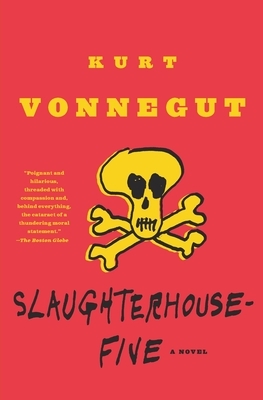
Slaughterhouse-Five, an American classic, is one of the world’s great antiwar books. Centering on the infamous World War II firebombing of Dresden, the novel is the result of what Kurt Vonnegut described as a twenty-three-year struggle to write a book about what he had witnessed as an American prisoner of war. It combines historical fiction, science fiction, autobiography, and satire in an account of the life of Billy Pilgrim, a barber’s son turned draftee turned optometrist turned alien abductee. As Vonnegut had, Billy experiences the destruction of Dresden as a POW. Unlike Vonnegut, he experiences time travel, or coming “unstuck in time.”
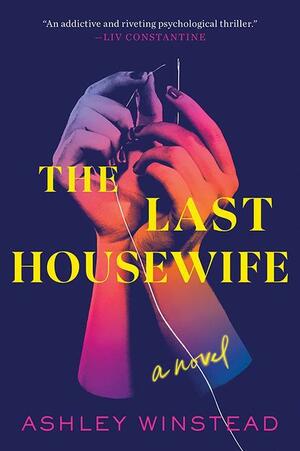
From the author of the acclaimed In My Dreams I Hold a Knife comes a pitch-black thriller about a woman determined to destroy a powerful cult and avenge the deaths of the women taken in by it, no matter the cost.
While in college in upstate New York, Shay Evans and her best friends met a captivating man who seduced them with a web of lies about the way the world works, bringing them under his thrall. By senior year, Shay and her friend Laurel were the only ones who managed to escape. Now, eight years later, Shay’s built a new life in a tony Texas suburb. But when she hears the horrifying news of Laurel’s death—delivered, of all ways, by her favorite true-crime podcast crusader—she begins to suspect that the past she thought she buried is still very much alive, and the predators more dangerous than ever.
Recruiting the help of the podcast host, Shay goes back to the place she vowed never to return to in search of answers. As she follows the threads of her friend’s life, she’s pulled into a dark, seductive world, where wealth and privilege shield brutal philosophies that feel all too familiar. When Shay’s obsession with uncovering the truth becomes so consuming she can no longer separate her desire for justice from darker desires newly reawakened, she must confront the depths of her own complicity and conditioning. But in a world built for men to rule it—both inside the cult and outside of it—is justice even possible, and if so, how far will Shay go to get it?
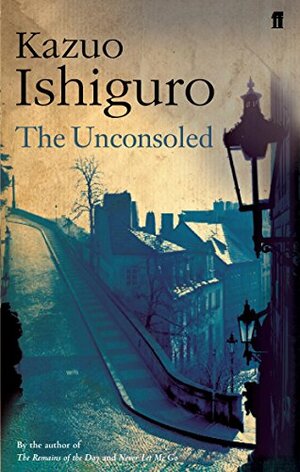
Ryder, a renowned pianist, arrives in a Central European city he cannot identify for a concert he cannot remember agreeing to give. But then as he traverses a landscape by turns eerie and comical – and always strangely malleable, as a dream might be – he comes steadily to realise he is facing the most crucial performance of his life.
Ishiguro’s extraordinary and original study of a man whose life has accelerated beyond his control was met on publication by consternation, vilification – and the highest praise.
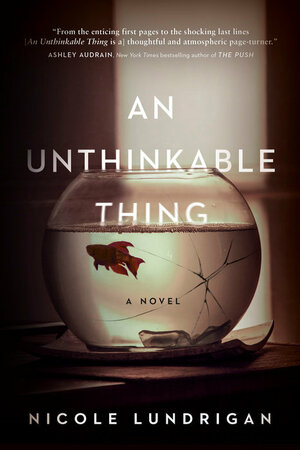
A tragedy brings a young boy into the home of a “perfect” family–one whose dark secrets begin closing in, until a horrifying moment changes everything.
Tommie Ware’s life is turned upside down the summer of 1958, just after his eleventh birthday. When his beloved aunt—the woman who raised him—doesn’t return after her shift as a night nurse and is later found murdered, there is only one place left for Tommie to go: “home” to the mother who handed him over the day he was born.
All is not as it seems behind the hedgerow surrounding the lavish Henneberry estate where Tommie’s mother, Esther, works as live-in housekeeper. Her employers have agreed he can stay until she “sorts things out,” but as she’s at the family’s beck and call around the clock, Tommie is mostly left on his own to navigate the grounds, the massive house, and the twisted family inside.
Soon he is enmeshed in the oppressive attentions of matriarch Muriel, who is often heavily medicated, and of fifteen-year-old Martin, who treats Tommie sometimes like a kid brother, sometimes like a pawn in a confusing game. While Dr. Henneberry mostly ignores Tommie, he also seems eager for him to be gone. Then there’s the elderly neighbour, who may know more about the family’s past than anyone else will say.
By summer’s end, the secrets and games tighten around Tommie and his mother, until a horrific crime is discovered and we are faced with an unthinkable question: could an eleven-year-old boy really have committed cold-blooded murder?
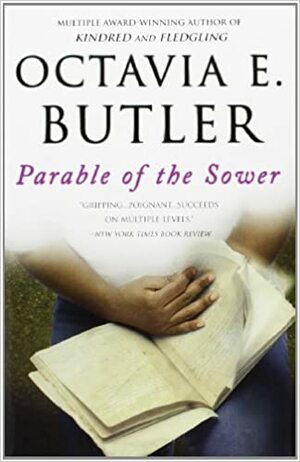
This acclaimed post-apocalyptic novel of hope and terror from an award-winning author “pairs well with 1984 or The Handmaid’s Tale” and includes a foreword by N. K. Jemisin (John Green, New York Times).
When global climate change and economic crises lead to social chaos in the early 2020s, California becomes full of dangers, from pervasive water shortage to masses of vagabonds who will do anything to live to see another day. Fifteen-year-old Lauren Olamina lives inside a gated community with her preacher father, family, and neighbors, sheltered from the surrounding anarchy. In a society where any vulnerability is a risk, she suffers from hyperempathy, a debilitating sensitivity to others’ emotions.
Precocious and clear-eyed, Lauren must make her voice heard in order to protect her loved ones from the imminent disasters her small community stubbornly ignores. But what begins as a fight for survival soon leads to something much more: the birth of a new faith . . . and a startling vision of human destiny.
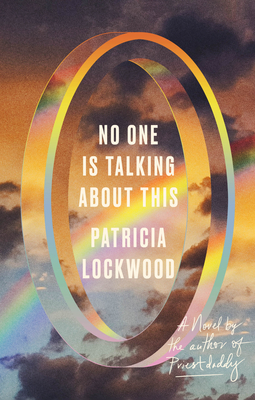
As this urgent, genre-defying book opens, a woman who has recently been elevated to prominence for her social media posts travels around the world to meet her adoring fans. She is overwhelmed by navigating the new language and etiquette of what she terms “the portal,” where she grapples with an unshakable conviction that a vast chorus of voices is now dictating her thoughts. When existential threats–from climate change and economic precariousness to the rise of an unnamed dictator and an epidemic of loneliness–begin to loom, she posts her way deeper into the portal’s void. An avalanche of images, details, and references accumulate to form a landscape that is post-sense, post-irony, post-everything. “Are we in hell?” the people of the portal ask themselves. “Are we all just going to keep doing this until we die?”
Suddenly, two texts from her mother pierce the fray: “Something has gone wrong,” and “How soon can you get here?” As real life and its stakes collide with the increasingly absurd antics of the portal, the woman confronts a world that seems to contain both an abundance of proof that there is goodness, empathy, and justice in the universe, and a deluge of evidence to the contrary.
Fragmentary and omniscient, incisive and sincere, No One Is Talking About This is at once a love letter to the endless scroll and a profound, modern meditation on love, language, and human connection from a singular voice in American literature.
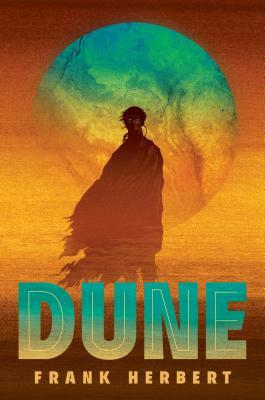
Set on the desert planet Arrakis, Dune is the story of the boy Paul Atreides, heir to a noble family tasked with ruling an inhospitable world where the only thing of value is the “spice” melange, a drug capable of extending life and enhancing consciousness. Coveted across the known universe, melange is a prize worth killing for…
When House Atreides is betrayed, the destruction of Paul’s family will set the boy on a journey toward a destiny greater than he could ever have imagined. And as he evolves into the mysterious man known as Muad’Dib, he will bring to fruition humankind’s most ancient and unattainable dream.
A stunning blend of adventure and mysticism, environmentalism and politics, Dune won the first Nebula Award, shared the Hugo Award, and formed the basis of what is undoubtedly the grandest epic in science fiction.

From Shion Miura, the award-winning author of The Great Passage, comes a rapturous novel where the contemporary and the traditional meet amid the splendor of Japan’s mountain way of life.
Yuki Hirano is just out of high school when his parents enroll him, against his will, in a forestry training program in the remote mountain village of Kamusari. No phone, no internet, no shopping. Just a small, inviting community where the most common expression is “take it easy.”
At first, Yuki is exhausted, fumbles with the tools, asks silly questions, and feels like an outcast. Kamusari is the last place a city boy from Yokohama wants to spend a year of his life. But as resistant as he might be, the scent of the cedars and the staggering beauty of the region have a pull.
Yuki learns to fell trees and plant saplings. He begins to embrace local festivals, he’s mesmerized by legends of the mountain, and he might be falling in love. In learning to respect the forest on Mt. Kamusari for its majestic qualities and its inexplicable secrets, Yuki starts to appreciate Kamusari’s harmony with nature and its ancient traditions.
In this warm and lively coming-of-age story, Miura transports us from the trappings of city life to the trials, mysteries, and delights of a mythical mountain forest.

The first book in Kate Atkinson’s Jackson Brodie Mysteries series, called “The best mystery of the decade” by Stephen King, finds private investigator Jackson Brodie following three seemingly unconnected family mysteries in Edinburg.Case one: A little girl goes missing in the night. Case two: A beautiful young office worker falls victim to a maniac’s apparently random attack. Case three: A new mother finds herself trapped in a hell of her own making – with a very needy baby and a very demanding husband – until a fit of rage creates a grisly, bloody escape. Thirty years after the first incident, as private investigator Jackson Brodie begins investigating all three cases, startling connections and discoveries emerge . . .
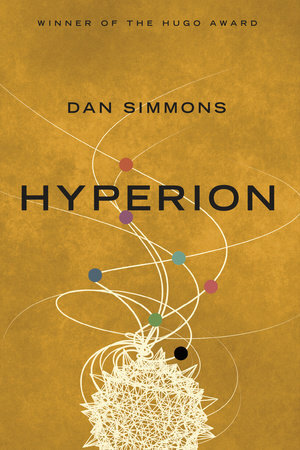
A stunning tour de force filled with transcendent awe and wonder, Hyperion is a masterwork of science fiction that resonates with excitement and invention, the first volume in a remarkable epic by the multiple-award-winning author of The Hollow Man.
On the world called Hyperion, beyond the reach of galactic law, waits a creature called the Shrike. There are those who worship it. There are those who fear it. And there are those who have vowed to destroy it. In the Valley of the Time Tombs, where huge, brooding structures move backward through time, the Shrike waits for them all.
On the eve of Armageddon, with the entire galaxy at war, seven pilgrims set forth on a final voyage to Hyperion seeking the answers to the unsolved riddles of their lives. Each carries a desperate hope—and a terrible secret. And one may hold the fate of humanity in his hands.
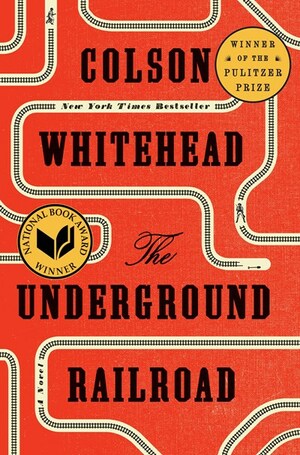
Winner of the Pulitzer Prize and the National Book Award, the #1 New York Times bestseller from Colson Whitehead, a magnificent tour de force chronicling a young slave’s adventures as she makes a desperate bid for freedom in the antebellum South
Cora is a slave on a cotton plantation in Georgia. Life is hell for all the slaves, but especially bad for Cora; an outcast even among her fellow Africans, she is coming into womanhood–where even greater pain awaits. When Caesar, a recent arrival from Virginia, tells her about the Underground Railroad, they decide to take a terrifying risk and escape. Matters do not go as planned–Cora kills a young white boy who tries to capture her. Though they manage to find a station and head north, they are being hunted.
In Whitehead’s ingenious conception, the Underground Railroad is no mere metaphor–engineers and conductors operate a secret network of tracks and tunnels beneath the Southern soil. Cora and Caesar’s first stop is South Carolina, in a city that initially seems like a haven. But the city’s placid surface masks an insidious scheme designed for its black denizens. And even worse: Ridgeway, the relentless slave catcher, is close on their heels. Forced to flee again, Cora embarks on a harrowing flight, state by state, seeking true freedom.
Like the protagonist of Gulliver’s Travels, Cora encounters different worlds at each stage of her journey–hers is an odyssey through time as well as space. As Whitehead brilliantly re-creates the unique terrors for black people in the pre-Civil War era, his narrative seamlessly weaves the saga of America from the brutal importation of Africans to the unfulfilled promises of the present day.
The Underground Railroad is at once a kinetic adventure tale of one woman’s ferocious will to escape the horrors of bondage and a shattering, powerful meditation on the history we all share.
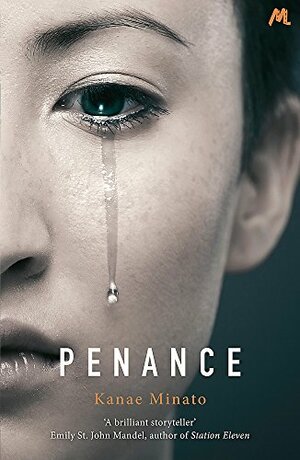
When they were children, Sae, Maki, Akiko, and Yuko were tricked into separating from their friend Emili by a mysterious stranger. Then the unthinkable occurs: Emili is found murdered hours later.
Sae, Maki, Akiko, and Yuko weren’t able to accurately describe the stranger’s appearance to the police after the Emili’s body was discovered. Asako, Emili’s mother, curses the surviving girls, vowing that they will pay for her daughter’s murder.
Like Confessions, Kanae Minato’s award-winning, internationally bestselling debut novel, Penance is a dark and voice-driven tale of revenge and psychological trauma that will leave listeners breathless.
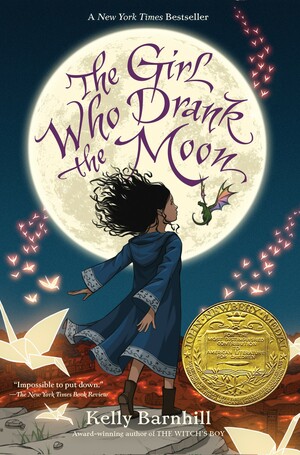
Every year, the people of the Protectorate leave a baby as an offering to the witch who lives in the forest. They hope this sacrifice will keep her from terrorizing their town. But the witch in the Forest, Xan, is kind. She shares her home with a wise Swamp Monster and a Perfectly Tiny Dragon. Xan rescues the children and delivers them to welcoming families on the other side of the forest, nourishing the babies with starlight on the journey.
One year, Xan accidentally feeds a baby moonlight instead of starlight, filling the ordinary child with extraordinary magic. Xan decides she must raise this girl, whom she calls Luna, as her own. As Luna’s thirteenth birthday approaches, her magic begins to emerge—with dangerous consequences. Meanwhile, a young man from the Protectorate is determined to free his people by killing the witch. Deadly birds with uncertain intentions flock nearby. A volcano, quiet for centuries, rumbles just beneath the earth’s surface. And the woman with the Tiger’s heart is on the prowl . . .
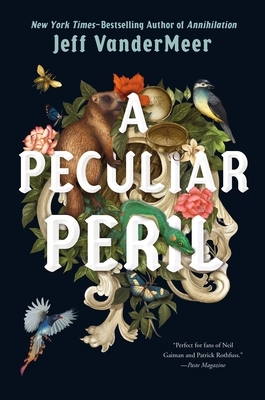
A Peculiar Peril is a head-spinning epic about three friends on a quest to protect the world from a threat as unknowable as it is terrifying, from the Nebula Award-winning and New York Times bestselling author of Annihilation, Jeff VanderMeer.Jonathan Lambshead stands to inherit his deceased grandfather’s overstuffed mansion–a veritable cabinet of curiosities–once he and two schoolmates catalog its contents. But the three soon discover that the house is filled with far more than just oddities: It holds clues linking to an alt-Earth called Aurora, where the notorious English occultist Aleister Crowley has stormed back to life on a magic-fueled rampage across a surreal, through-the-looking-glass version of Europe replete with talking animals (and vegetables). Swept into encounters with allies more unpredictable than enemies, Jonathan pieces together his destiny as a member of a secret society devoted to keeping our world separate from Aurora. But as the ground shifts and allegiances change with every step, he and his friends sink ever deeper into a deadly pursuit of the profound evil that is also chasing after them.

This is the story of a man who said that he would stop the motor of the world and did. Was he a destroyer or the greatest of liberators?Why did he have to fight his battle, not against his enemies, but against those who needed him most, and his hardest battle against the woman he loved? What is the world’s motor — and the motive power of every man? You will know the answer to these questions when you discover the reason behind the baffling events that play havoc with the lives of the characters in this story.Tremendous in its scope, this novel presents an astounding panorama of human life — from the productive genius who becomes a worthless playboy — to the great steel industrialist who does not know that he is working for his own destruction — to the philosopher who becomes a pirate — to the composer who gives up his career on the night of his triumph — to the woman who runs a transcontinental railroad — to the lowest track worker in her Terminal tunnels. You must be prepared, when you read this novel, to check every premise at the root of your convictions.This is a mystery story, not about the murder — and rebirth — of man’s spirit. It is a philosophical revolution, told in the form of an action thriller of violent events, a ruthlessly brilliant plot structure and an irresistible suspense. Do you say this is impossible? Well, that is the first of your premises to check.
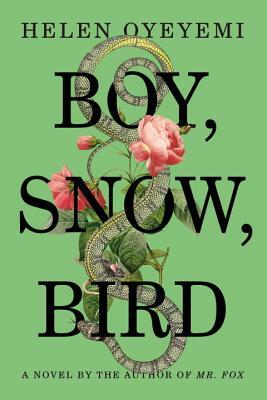
In the winter of 1953, Boy Novak arrives by chance in a small town in Massachusetts looking, she believes, for beauty–the opposite of the life she’s left behind in New York. She marries Arturo Whitman, a local widower, and becomes stepmother to his winsome daughter, Snow. A wicked stepmother is a creature Boy never imagined she’d become, but elements of the familiar tale of aesthetic obsession begin to play themselves out when the birth of Boy’s daughter, Bird, who is dark-skinned, exposes the Whitmans as light-skinned African-Americans passing for white. And even as Boy, Snow, and Bird are divided, their estrangement is complicated by an insistent curiosity about one another. In seeking an understanding that is separate from the image each presents to the world, Boy, Snow, and Bird confront the tyranny of the mirror to ask how much power surfaces really hold. Dazzlingly inventive and powerfully moving, Boy, Snow, Bird is an astonishing and enchanting novel. With breathtaking feats of imagination, Helen Oyeyemi confirms her place as one of the most original and dynamic literary voices of our time.
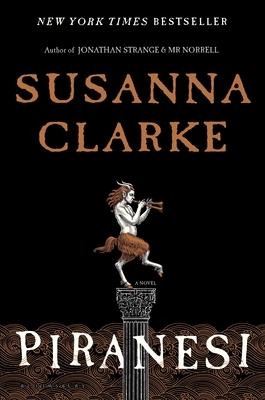
From the New York Times bestselling author of Jonathan Strange & Mr Norrell, an intoxicating, hypnotic new novel set in a dreamlike alternative reality.
Piranesi’s house is no ordinary building: its rooms are infinite, its corridors endless, its walls are lined with thousands upon thousands of statues, each one different from all the others. Within the labyrinth of halls an ocean is imprisoned; waves thunder up staircases, rooms are flooded in an instant. But Piranesi is not afraid; he understands the tides as he understands the pattern of the labyrinth itself. He lives to explore the house.
There is one other person in the house–a man called The Other, who visits Piranesi twice a week and asks for help with research into A Great and Secret Knowledge. But as Piranesi explores, evidence emerges of another person, and a terrible truth begins to unravel, revealing a world beyond the one Piranesi has always known.
For readers of Neil Gaiman’s The Ocean at the End of the Lane and fans of Madeline Miller’s Circe, Piranesi introduces an astonishing new world, an infinite labyrinth, full of startling images and surreal beauty, haunted by the tides and the clouds.
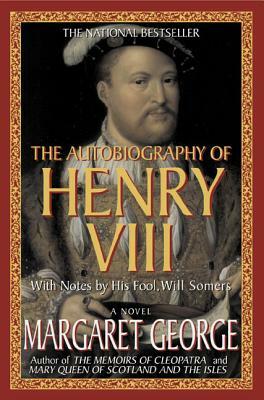
The Autobiography of Henry VIII is the magnificent historical novel that established Margaret George’s career. Evocatively written in the first person as Henry VIII’s private journals, the novel was the product of fifteen years of meticulous research and five handwritten drafts.Much has been written about the mighty, egotistical Henry VIII: the man who dismantled the Church because it would not grant him the divorce he wanted; who married six women and beheaded two of them; who executed his friend Thomas More; who sacked the monasteries; who longed for a son and neglected his daughters, Mary and Elizabeth; who finally grew fat, disease-ridden, dissolute. Now, in her magnificent work of storytelling and imagination Margaret George bring us Henry VIII’s story as he himself might have told it, in memoirs interspersed with irreverent comments from his jester and confident, Will Somers. Brilliantly combining history, wit, dramatic narrative, and an extraordinary grasp of the pleasures and perils of power, this monumental novel shows us Henry the man more vividly than he has ever been seen before.
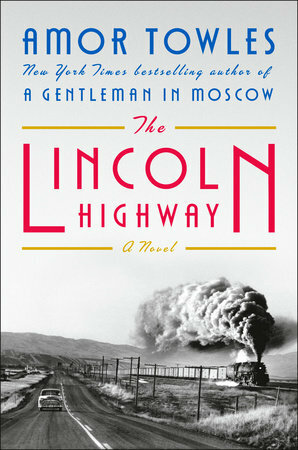
In June, 1954, eighteen-year-old Emmett Watson is driven home to Nebraska by the warden of the work farm where he has just served a year for involuntary manslaughter. His mother long gone, his father recently deceased, and the family farm foreclosed upon by the bank, Emmett’s intention is to pick up his eight-year-old brother and head west where they can start their lives anew. But when the warden drives away, Emmett discovers that two friends from the work farm have hidden themselves in the trunk of the warden’s car. Together, they have hatched an altogether different plan for Emmett’s future.
Spanning just ten days and told from multiple points of view, Towles’s third novel will satisfy fans of his multi-layered literary styling while providing them an array of new and richly imagined settings, characters, and themes.
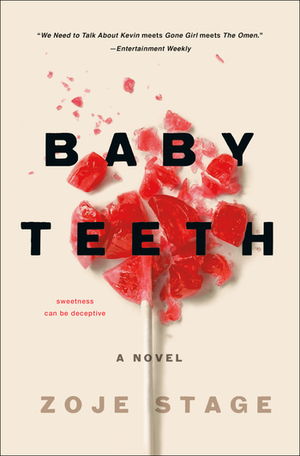
MEET HANNA: Seven-year-old Hanna is a sweet-but-silent angel in the eyes of her adoring father Alex. He’s the only person who understands her. But her mother Suzette stands in her way, and she’ll try any trick she can think of to get rid of her. Ideally for good.
MEET SUZETTE: Suzette loves her daughter, but after years of expulsions and strained home schooling, her precarious health and sanity are weakening day by day. She’s also becoming increasingly frightened by Hanna’s little games, while her husband Alex remains blind to the failing family dynamics. Soon, Suzette starts to fear that maybe their supposedly innocent baby girl may have a truly sinister agenda.
A battle of wills between mother and daughter reveals the frailty and falsehood of familial bonds in award-winning playwright and filmmaker Zoje Stage’s tense novel of psychological suspense, Baby Teeth.


